Best Multifocal Contact Lenses for Presbyopia in Australia 2025
17th Dec 2025

Presbyopia usually arrives without much warning. One day, small text feels harder to read. Menus need better lighting. Reading glasses begin to follow you everywhere. For most Australians, these changes start in their 40s and are a normal part of how the eyes age.
Rather than switching between distance glasses and readers, many people now explore multifocal contact lenses. These lenses are worn like standard contacts but are designed to support vision at more than one distance at the same time.
Understanding how multifocal lenses work—and how they are fitted and supplied in Australia—can help you decide whether they are worth considering.
Skip to sections:
-
Best Multifocal Contact Lenses for Presbyopia
-
What to Expect When Trying Multifocal Contact Lenses
-
Getting Fitted and Buying Multifocal Lenses in Australia
-
What If You Have Astigmatism?
-
Frequently asked questions (FAQ)
Multifocal vs. Bifocal: What’s the Difference?
Multifocal Contact Lenses
Most contact lenses prescribed for presbyopia today are multifocal lenses. They use a graduated optical design, often arranged in concentric zones, that allows light from far, intermediate, and near distances to be processed simultaneously. The visual system then prioritises the clearest image depending on the task.
This approach supports everyday activities such as driving, working on a computer, and reading without changing eyewear.
Bifocal Contact Lenses
The term bifocal traditionally describes lenses with two distinct optical powers—one for distance and one for near—with a noticeable shift between them. While bifocal remains a common search term, true bifocal contact lenses are now uncommon. In practice, people searching for bifocal contacts are usually assessed for modern multifocal designs instead.
Why Multifocals Are Preferred
Compared with older bifocal concepts, multifocal lenses generally provide smoother transitions between distances, more usable intermediate vision for screens and dashboards, and better suitability for all-day wear.
How to Choose a Multifocal Lens in Australia
Daily or Monthly Replacement
Multifocal lenses are available with different replacement schedules.
Daily disposable lenses are worn once and discarded. They remove the need for cleaning and are often chosen for convenience, travel, or allergy management.
Monthly (and some fortnightly) lenses are worn repeatedly with nightly cleaning. They are commonly selected by people who wear contact lenses most days and prefer a longer replacement cycle.
Comfort, Materials, and the Australian Climate
Most modern multifocal lenses are made from silicone hydrogel materials. These allow higher levels of oxygen to reach the eye, which helps maintain comfort during long-wearing days—particularly relevant in Australia’s dry climate, air-conditioned offices, and outdoor conditions.
Some manufacturers also use branded moisture technologies:
- Water Gradient Technology (Alcon), designed to create a very high water content at the lens surface
- MoistureSeal Technology (Bausch + Lomb), designed to help lenses retain moisture over time
Multifocal lenses behave differently depending on prescription strength, pupil size, and visual demands. Because of this variability, fitting is not a one-size-fits-all process. A registered Australian optometrist assesses these factors and may use trial lenses and review visits to refine the result.
Best Multifocal Contact Lenses for Presbyopia in Australia
The following lenses are well-established options available through Australian optometry practices. Suitability depends on individual assessment.
DAILIES TOTAL1 Multifocal
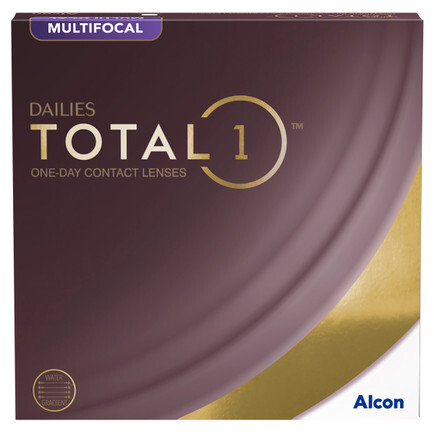
A daily disposable lens featuring Water Gradient Technology, often chosen by people prioritising comfort and minimal maintenance.
1-Day ACUVUE MOIST Multifocal
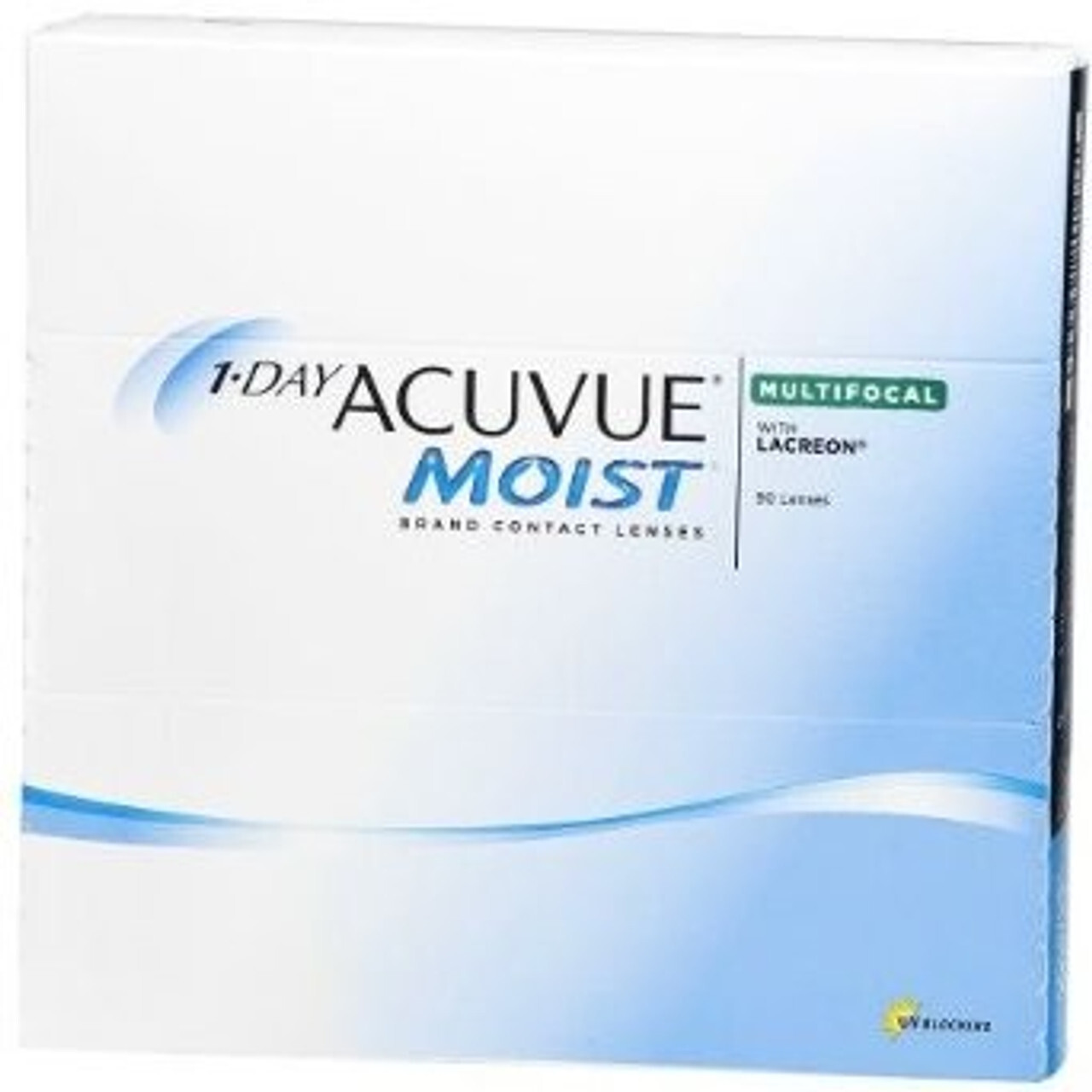
A daily disposable lens using LACREON® moisture technology. The ACUVUE MOIST range is also well known in Australia, and an optometrist can advise whether a suitable multifocal option within the Acuvue portfolio is appropriate.
Bausch + Lomb ULTRA for Presbyopia

A monthly lens using MoistureSeal Technology, often chosen by people who spend extended time in dry indoor environments.
Biofinity Multifocal
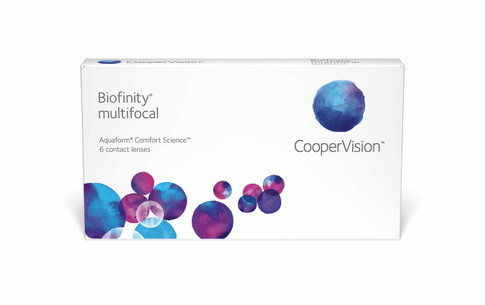
A monthly silicone hydrogel lens is commonly selected by full-time wearers seeking consistent performance across long days.
What to Expect When Trying Multifocal Contact Lenses
Multifocal lenses do not usually feel “perfect” on the first day. For many people, there is a period of adjustment while the visual system adapts to the new way of focusing.
Some people notice improvement within days, while others need a few weeks and small prescription adjustments. Follow-up visits are a normal part of the fitting process. In some cases, wearers decide that multifocal lenses are not the right solution for their needs, and alternative options can be discussed with an optometrist.
Understanding this process upfront helps set realistic expectations and leads to better outcomes.
What If You Have Astigmatism?
Many people with presbyopia also have astigmatism. In these cases, toric multifocal contact lenses may be considered, depending on prescription requirements and lens availability.
Not all combinations of prescriptions are suitable for multifocal contact lenses, which is why professional assessment is essential. An optometrist can explain whether multifocal lenses are an option or whether other vision solutions may be more appropriate.
Getting Fitted and Buying Multifocal Lenses in Australia
Multifocal contact lenses require a prescription that differs from single-vision contacts. An existing single-vision prescription cannot be reused. Trial lenses and follow-up visits are commonly part of the fitting process to achieve a workable balance between distance and near vision.
Many Australians choose to purchase their contact lenses through established local retailers such as LensWorld Australia. Once a multifocal prescription has been issued by a registered Australian optometrist, ordering through a retailer like LensWorld provides a straightforward way to manage ongoing lens supply from within Australia.
Final Thoughts
Multifocal contact lenses can reduce reliance on reading glasses, but they are not a one-size-fits-all solution. Success depends on realistic expectations, individual eye characteristics, and careful fitting.
If you are considering multifocal lenses, the most practical next step is to book an appointment with your local Australian optometrist. A thorough assessment will help determine whether multifocal contact lenses are suitable for you and which option is most likely to work well.
This article is general information only and does not replace professional eye care advice. Multifocal contact lenses require assessment and fitting by a registered Australian optometrist.
Frequently asked questions (FAQ)
Are bifocal and multifocal contact lenses the same?
Not exactly. Bifocal traditionally refers to two fixed powers, while multifocal lenses use graduated designs. In Australia, most people searching for bifocal contacts are prescribed multifocal lenses instead.
How long does it take to adjust to multifocal lenses?
Adjustment varies. Some people adapt within days, while others need a few weeks and minor prescription refinements.
Can I use my old contact lens prescription?
No. Multifocal lenses require a different prescription and fitting process from single-vision contacts.
Are multifocal lenses suitable for computer work?
They are designed to support intermediate vision, but individual results depend on fitting and visual demands.
Sources:
- https://www.optometry.org.au/wp-content/uploads/GVFL/Brochure_PDFs/Presbyopia-2018-A4-single-page-final.pdf
- https://www.allaboutvision.com/eyewear/contact-lenses/conditions/bifocal-contacts
- https://www.optometrists.org/general-practice-optometry/optical/guide-to-contact-lenses/guide-to-soft-contacts-lenses/
- https://coopervision.co.nz/about-contacts/multifocal-contact-lenses
- https://www.optometry.org.au/institute-of-excellence/cpd-events/a-guide-to-contact-lenses-for-presbyopia-who-what-when-how/